How a Renovation Demolition Contractor Became a Tokenizer
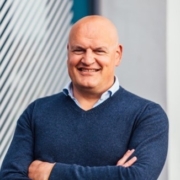
In conversation with Barry de Bruin, Director of RAZE Renovation Demolition
Anyone who knows RAZE Renovation Demolition does not initially think of FinTech or tokenization. Yet it is precisely there that a development has arisen in the recent period. Not from the technology, but from a practical entrepreneurial question.
Barry de Bruin says that it actually started with digitization of his own organization. “We had been working on better organizing processes for some time. Software helps us to tightly structure projects, calculations and planning. From that process, we came into contact with ByeleX.”
During that process, a new idea arose. If projects are increasingly organized digitally, why should the participation structure remain traditional?
“That was a logical next step for me,” says De Bruin. “We are building a franchise. Then you start thinking about how to properly organize participations and ownership. That’s where tokenization came into the picture.”
The basis for this already existed. Liqwith’s platform ‘Plaza PLUS‘ was previously developed by ByeleX, but had the function of serving a specific customer at a time. For example, solar parks in England.
That difference became decisive for the next step. Initially, De Bruin wanted to use the platform mainly for his own organization. “My first thought was simple: we use this for RAZE and for our franchise. That was the plan.” But once the system was in place, the perspective changed.
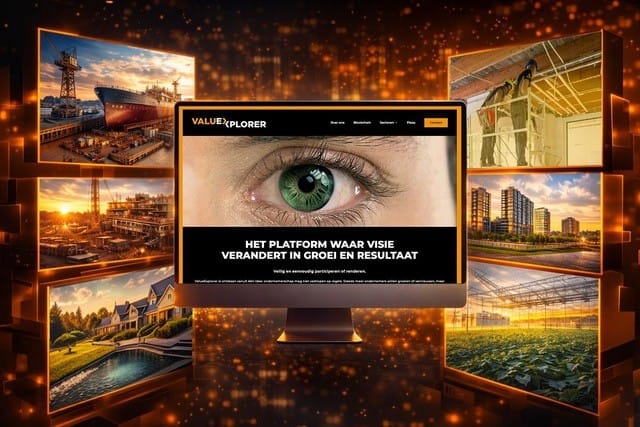
De Bruin: “When we really saw it work, we realized that it is actually much more widely applicable. Not only for renovation demolition. This can also be done for real estate, industry, maritime, leisure and greenhouse horticulture.” From that moment on, the platform began to develop from a tool to an infrastructure.
Further development is now being carried out by the Liqwith team, which has outsourced this to ByeleX. ‘We are working together on the next step. Liqwith’s FinTech knowledge provides the experience needed to further expand the platform.’ In parallel, Liqwith is working on access to the platform, governance and security.
“We have developed a model in which advisors can guide projects to the platform,” says De Bruin. “That’s important, because technology alone is not enough. You need people who structure and supervise projects.” At the moment, the initiative is in a phase in which the first projects are being prepared.
“The first project is now being prepared to be placed,” says De Bruin. “At the same time, we are in talks with various parties who want to join.”
What started as a question about digitization of a renovation demolition company grew into a platform that can connect multiple sectors.
According to De Bruin it actually is quite simple.“You start with a practical problem in your own company. And before you know it, you’re building something that will benefit many more parties.”
For more information, visit ValueExplorer.nl